A Professional Guide to Recognizing Symptoms, Mitigating Risks, and Securing Your Smile
You are enjoying a meal, and suddenly, a sharp, fleeting jolt of pain shoots through your jaw when you bite down – only to vanish just as quickly. It is easy to brush it off as a random fluke. However, that intermittent discomfort is often the hallmark signature of Cracked Tooth Syndrome (CTS), a condition that can be difficult to detect because symptoms may come and go.
Unlike a dramatic, obvious fracture from trauma, a cracked tooth often features a microscopic fracture line hidden beneath the enamel or disappearing beneath the gumline. Because the crack opens and closes when you chew, it irritates the soft dental pulp inside. Ignoring this early warning sign does not make it go away – instead, it invites a cascade of severe oral health complications.
What is Cracked Tooth Syndrome and Why Does It Happen?
Cracked Tooth Syndrome occurs when an incomplete fracture develops in a natural tooth without initially breaking off a piece of the structure. Common triggers and risk factors include:
- Chronic Bruxism: Habitual teeth grinding or clenching during sleep places immense, sustained pressure on posterior teeth.
- Heavy Masticatory Stress: Biting down hard on unexpected objects, such as popcorn kernels, ice cubes, or hard candies.
- Large Existing Restorations: Older, compromised amalgam or composite fillings that no longer provide adequate structural reinforcement to the remaining tooth cusps.
- Thermal Stress: Rapid temperature fluctuations from consuming extremely hot foods followed immediately by ice-cold beverages, causing micro-expansion and contraction in dental enamel.
The High Cost of Delay: What Happens When You Ignore a Cracked Tooth?
The greatest danger of Cracked Tooth Syndrome lies in its deceptively mild early symptoms. Because the pain comes and goes, patients frequently delay seeking professional evaluation. This delay transforms a simple, treatable fix into a complex dental emergency.
- Pulpitis and Irreversible Nerve Damage: As the crack deepens with every bite, oral bacteria infiltrate the inner pulp chamber, triggering painful inflammation (reversible progressing to irreversible pulpitis).
- The Need for Root Canal Therapy: Once bacteria infect the nerve, a simple filling or crown is no longer sufficient. The patient must undergo a root canal procedure to clear the infection before restoration.
- Tooth Splitting: Left untreated, a vertical crack might eventually propagate down through the root system (split tooth). Once a root splits vertically, the tooth may no longer be restorable and must be extracted entirely.
- Costly Surgical Interventions: What could have been resolved with an economical protective crown early on escalates into complex extractions, bone grafting, and dental implant placement.
How Modern Dentistry Diagnoses and Treats CTS
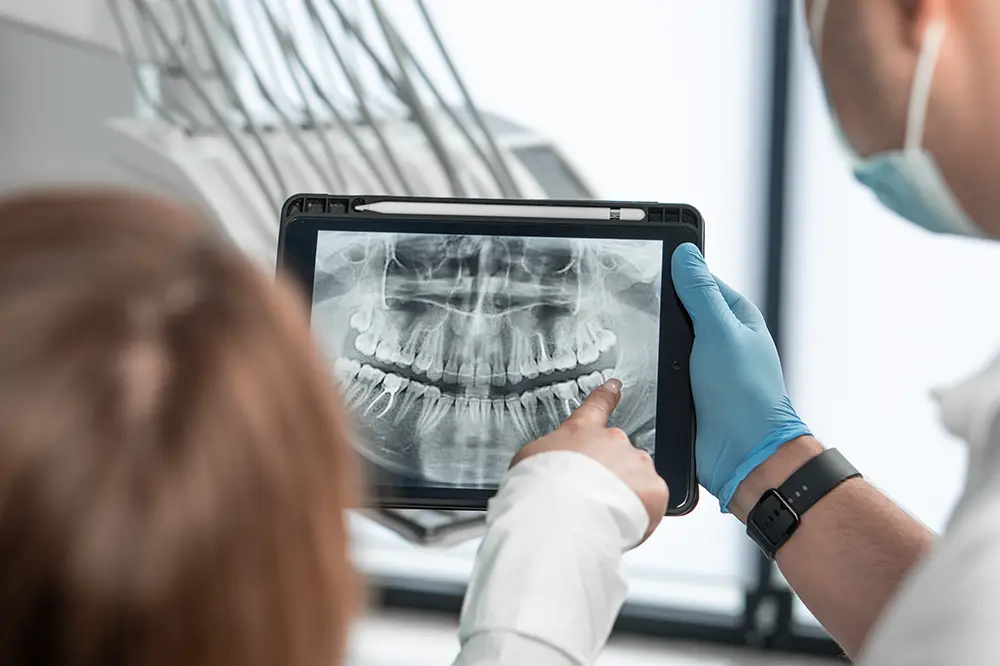
Diagnosing Cracked Tooth Syndrome requires specialized clinical detection tools, including high-magnification dental microscopes, transillumination, specialized bite tests, and 3D CBCT imaging to trace hidden fracture lines.
Depending on the severity and depth of the fracture, treatment protocols include:
- Full-Coverage Dental Crowns: For moderate cracks, placing a custom porcelain or zirconia crown acts like a protective “helmet,” holding the tooth structure together and stopping the micro-flexing when you chew.
- Endodontic Therapy + Crown: If the pulp is inflamed or infected, root canal treatment may be needed to clean and disinfect the root canal system. A crown may then be recommended to protect the tooth and restore function.
- Surgical Extraction: If the fracture extends deep below the bone level, extraction followed by a modern titanium dental implant may be considered to restore your smile’s integrity.
Don’t Wait for the Snap: Cracked Tooth Syndrome is a progressive structural failure. Every meal you chew places microscopic stress on an unfortified fracture line. Early assessment may help your dentist determine whether the tooth can be protected and reduce the risk of further damage.
FAQs
No. A crack does not heal like a broken bone. Early assessment may help protect the tooth and reduce the chance of further damage.
Symptoms can include sharp pain when biting or releasing a bite, sensitivity to hot or cold, or pain that comes and goes. Some cracked teeth have few symptoms.
It can be, especially if there is severe pain, swelling, trauma, fever or a broken tooth. Contact a dentist promptly for advice.
Not always. A root canal may be needed if the pulp is inflamed or infected. Your dentist will assess the tooth before recommending treatment.
Experiencing sharp pain when chewing or sensitive reactions to temperature? Schedule a diagnostic evaluation with our clinical team today to protect your smile